Fiona Davis takes iconic New York City buildings and creates richly-imagined stories around them: the Barbizon Hotel for Women in The Dollhouse, The Dakota apartment building in The Address, The Grand Central Terminal in The Masterpiece, and the Chelsea Hotel in The Chelsea Girls. Her new book, coming out on August 4, brings to life the grand New York Public Library building, weaving together two stories of the people in it.
The first story takes place in the early 1900s when Laura and Jack Lyons and their two children live in the library building for Jack’s caretaking job there. (While this family is completely fictional, there actually was an apartment in the building used formerly by the library’s superintendents.) Jack is an aspiring author, and in his off-duty hours, he is completely immersed in writing a novel. Laura and their two children make themselves at home as best as possible in the immense and majestic halls of the building, open all day to scholars and readers and quiet as a tomb at night. Laura has her own aspirations, and she follows her dream of entering the Columbia School of Journalism and becoming a reporter.
The second story takes place in the early 1990s and features a librarian for the Berg Collection, the world-class research library within this building that contains original manuscripts from authors like Edgar Allen Poe and William Shakespeare as well as memorabilia and oddities belonging to famous writers, such as Charles Dickens' cat paw letter opener. Sadie Donovan, slightly awkward but completely competent, is thrilled when she is put in charge of highlighting this collection in an upcoming special exhibit.
Both the Lyons and Sadie’s lives at the library are tainted by missing or stolen books and suspicions of their involvement in their loss, but their lives are also entwined in other ways. The mysteries of the books’ disappearances makes for compelling reading and allows for wonderful behind-the-scenes looks at the library and its system of dumbwaiters along with the marvelous architectural beauties of the place. Adding to the depth of the story is Laura’s involvement in the bohemian Heterodoxy Club for women and the discussion of the roles and expectations of women, both in 1914 and in the 1990s.
The enjoyable thing about Davis’ books is the mix of mystery, history, architecture, and societal issues. Here, there is a certain amount of suspense, some lovely interludes about the music scene in New York enjoyed by Sadie as an escape from her life, and a burly but surprisingly tender detective.
If you want to know more about this special library, it’s easy to do so at the New York Public Library website where an excellent page of “facts” can start you down the rabbit hole of exploration. https://www.nypl.org/about/locations/schwarzman/facts
Thanks to the publisher and Edelweiss and Netgalley for advance copies.
Reviews from the sunny side of the street! Positive reviews of upcoming books, mostly fiction and some non-fiction. View more at my Instagram page @leslie_stitches
Thursday, July 30, 2020
Friday, July 10, 2020
The Switch by Beth O'Leary
Last year, I fell in love with a debut novel called The Flatshare, which was a lovely and very creative story about two people who come together despite themselves. With its quirkiness, humor, and unusual plot, it was vastly compelling and entertaining reading. When the author’s second book was announced, I wondered if she had the ability to pull it off again—not the same story but the same characteristics as the first. The result is The Switch, publishing on August 18.
When grief overwhelms 29-year-old Leena and she needs a break from her hectic life in London, and her 79-year-old grandmother Eileen wants something more exciting than her current existence in small village Yorkshire, they decide to switch places for two-months time. Leena agrees to take over all the volunteer jobs her grandmother ably does, while Eileen grabs at a chance of later life romance and signs up on a dating site. What could go wrong?
The fun thing from the start is that you expect that maybe younger Leena will succeed and older Eileen will flounder, but that isn’t the way that it actually happens. Leena finds that her grandmother’s volunteer jobs are much trickier than she expects, and her first episode of dogwalking for a good-looking local teacher’s exuberant dog is downright embarrassing. Meanwhile, Eileen takes on the dating world with confidence and flair.
In addition, both women take to their new surroundings and develop friendships with disparate groups of people, who pose problems for their counterparts, but who benefit from the new friendships of granddaughter and grandmother. Surprisingly, things that are "wrong" seem to have a way of making themselves right with the sheer exuberance and determination of these two women.
The many things I liked about the author's first book are in evidence here--a creative plot, well-defined and unusual characters, humor, and loads of entertainment value. The author juggles the emotions and stages of grief with aplomb and ably writes about family estrangement, and this is the darker side that gives this book heft. The sense of community that these two women bring to their new locations is especially heart-warming in these divisive times.
In an interview through Macmillan, author Beth O’Leary talked about how time spent with her grandmother inspired the character of Eileen for this book. As a tribute to her grandmother, she created an older woman who was at the start of her adventures, and for this portrayal of an "active elder," she is to be commended. In the interview, she also mentioned that she often says, in response to her friend’s observation about embarrassing moments, “this will be in a book some day.” In fact, it sounds like her own exuberant dog gave her some good ideas about a dog walk gone bad.
The interview also revealed that she is at work on a third book called The Road Trip about two-days’ time spent with the worst possible combination of people—the ex-boyfriend, his best friend, and a “motley” collection of others. Based on her first two books, this will be another treat.
Thanks to Netgalley and Macmillan for an advance copy of The Switch.
When grief overwhelms 29-year-old Leena and she needs a break from her hectic life in London, and her 79-year-old grandmother Eileen wants something more exciting than her current existence in small village Yorkshire, they decide to switch places for two-months time. Leena agrees to take over all the volunteer jobs her grandmother ably does, while Eileen grabs at a chance of later life romance and signs up on a dating site. What could go wrong?
The fun thing from the start is that you expect that maybe younger Leena will succeed and older Eileen will flounder, but that isn’t the way that it actually happens. Leena finds that her grandmother’s volunteer jobs are much trickier than she expects, and her first episode of dogwalking for a good-looking local teacher’s exuberant dog is downright embarrassing. Meanwhile, Eileen takes on the dating world with confidence and flair.
In addition, both women take to their new surroundings and develop friendships with disparate groups of people, who pose problems for their counterparts, but who benefit from the new friendships of granddaughter and grandmother. Surprisingly, things that are "wrong" seem to have a way of making themselves right with the sheer exuberance and determination of these two women.
The many things I liked about the author's first book are in evidence here--a creative plot, well-defined and unusual characters, humor, and loads of entertainment value. The author juggles the emotions and stages of grief with aplomb and ably writes about family estrangement, and this is the darker side that gives this book heft. The sense of community that these two women bring to their new locations is especially heart-warming in these divisive times.
In an interview through Macmillan, author Beth O’Leary talked about how time spent with her grandmother inspired the character of Eileen for this book. As a tribute to her grandmother, she created an older woman who was at the start of her adventures, and for this portrayal of an "active elder," she is to be commended. In the interview, she also mentioned that she often says, in response to her friend’s observation about embarrassing moments, “this will be in a book some day.” In fact, it sounds like her own exuberant dog gave her some good ideas about a dog walk gone bad.
The interview also revealed that she is at work on a third book called The Road Trip about two-days’ time spent with the worst possible combination of people—the ex-boyfriend, his best friend, and a “motley” collection of others. Based on her first two books, this will be another treat.
Thanks to Netgalley and Macmillan for an advance copy of The Switch.
Tuesday, June 23, 2020
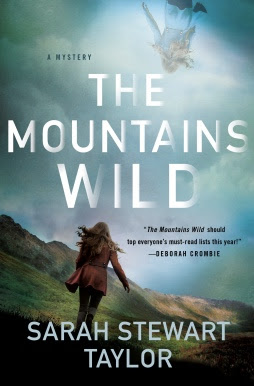
The Mountains Wild by Sarah Stewart Taylor
This book comes out today (June 23)—don’t miss it!
Maggie D’arcy, a Long Island homicide detective is called to Ireland to assist on a case of a missing woman. It’s Maggie’s second visit to Ireland, the first being when she went 23 years before to look for her cousin, Erin Flaherty, who had moved there and had then disappeared. Back then, and currently, the Irish police believed that the cases were related to other missing woman cases where there was a possible two-week window to find the person before she was murdered.
Maggie goes with many conflicting feelings: leaving her young daughter at home, re-opening old wounds, fear for her uncle’s health as Erin’s case is again highlighted, seeing an Irishman who has never left her heart, and being the outsider who is not officially part of the investigation. When she meets up with Roly Byrne, the detective from the case years ago, she meets up with a friend with whom she is now on equal footing after a successful career in homicide. She works with Roly and with his new partner, Detective Garda Katya Grzeskiewicz, Griz for short (and for ease).
Maggie spends time between places in Dublin and south in the Wicklow Mountains where Erin was thought to have disappeared and where the current woman went missing while out hiking. Searching through old case files, following new leads, retracing steps in Dublin and around Glenmalure, throwing around new ideas, setting up timelines and psychological profiles, Maggie keeps getting a little bit closer to understanding both her cousin and suspects, but she and Roly and Griz all wonder if it will be in time to save the current victim.
Maggie D’arcy, a Long Island homicide detective is called to Ireland to assist on a case of a missing woman. It’s Maggie’s second visit to Ireland, the first being when she went 23 years before to look for her cousin, Erin Flaherty, who had moved there and had then disappeared. Back then, and currently, the Irish police believed that the cases were related to other missing woman cases where there was a possible two-week window to find the person before she was murdered.
Maggie goes with many conflicting feelings: leaving her young daughter at home, re-opening old wounds, fear for her uncle’s health as Erin’s case is again highlighted, seeing an Irishman who has never left her heart, and being the outsider who is not officially part of the investigation. When she meets up with Roly Byrne, the detective from the case years ago, she meets up with a friend with whom she is now on equal footing after a successful career in homicide. She works with Roly and with his new partner, Detective Garda Katya Grzeskiewicz, Griz for short (and for ease).
Maggie spends time between places in Dublin and south in the Wicklow Mountains where Erin was thought to have disappeared and where the current woman went missing while out hiking. Searching through old case files, following new leads, retracing steps in Dublin and around Glenmalure, throwing around new ideas, setting up timelines and psychological profiles, Maggie keeps getting a little bit closer to understanding both her cousin and suspects, but she and Roly and Griz all wonder if it will be in time to save the current victim.
This is a really substantial, atmospheric addition to procedural-type mysteries. The streets of Dublin and the wild beauty of the Wicklow Mountains are wonderfully described here in a story that alternates between 1993 and young Maggie and 2016 and the older, wiser, more hardened detective. The result is a carefully rendered portrayal of a case that builds with suspense, surprises, and suppositions. There are a couple great "oh no" moments and a brilliant twist with believable characters and unsavory secrets.
Thanks to Edelweiss and Macmillan for an advance copy.
Thursday, June 4, 2020
500 Miles from You by Jenny Colgan
Sometimes, we can be really distant from our understanding of ourselves, from the people we need and love, and from where we ought to be. Jenny Colgan writes about this in fresh new ways in 500 Miles from You, the third book in her Scottish Bookshop series, but which can be read on its own.
Lissa Westcott, a nurse practitioner liaison for the National Health Service, visits patients at home in the busy city of London. She knows many of her patients well and treats them skillfully, often with humor, to encourage them to live more healthy lives. On her way between patients one day, she witnesses the violent death of a teenage boy she knows when a car plows deliberately into a group of his friends. Despite the help of her friends and employer, nothing seems to help her move past this trauma, until she is forced to take a leave and work for three months in a remote town in Scotland.
She trades places with an unknown colleague, Cormac MacPherson, also a nurse practitioner liaison in little Kirrinfief on the shores of Loch Ness. Cormac, a former Army medic, is suggested for this exchange to broaden his nursing skills. Neither is happy about the move, but they do an exact change—in jobs and in living arrangements—with Lissa moving into Cormac’s Highland cottage and Cormac taking Lissa’s small room in a group housing residence for hospital employees.
Both discover that they are completely out of their elements, puzzled by the impersonal nature of the city (Cormac) and the closely monitored life of a small village (Lissa). The loud, pollution-filled mayhem of London disturbs Cormac, and the quiet, idyllic lanes of Scotland do not sit well with Lissa at all.
They are forced to correspond—first through case notes, then with e-mails, moving into texts, as they share information on their patients and on the confounding people and places they encounter. Slowly, they each develop an appreciation for the places they are in and learn and heal in heartwarming ways.
The Proclaimers song “(I’m Gonna Be) 500 Miles” is kind of the behind-the-scenes theme for this fun book, which is about a developing friendship and romance, but also a love letter to two disparate locations that are beautifully described. Let Jenny Colgan’s new book take you away for an enjoyable armchair tour of Scotland and London and a surprising introduction to the life of a nurse.
500 Miles from You is published on June 9. Thanks to Harper Collins and Edelweiss for an advance copy. Other books in this series are The Bookshop on the Corner and The Bookshop on the Shore.
Lissa Westcott, a nurse practitioner liaison for the National Health Service, visits patients at home in the busy city of London. She knows many of her patients well and treats them skillfully, often with humor, to encourage them to live more healthy lives. On her way between patients one day, she witnesses the violent death of a teenage boy she knows when a car plows deliberately into a group of his friends. Despite the help of her friends and employer, nothing seems to help her move past this trauma, until she is forced to take a leave and work for three months in a remote town in Scotland.
She trades places with an unknown colleague, Cormac MacPherson, also a nurse practitioner liaison in little Kirrinfief on the shores of Loch Ness. Cormac, a former Army medic, is suggested for this exchange to broaden his nursing skills. Neither is happy about the move, but they do an exact change—in jobs and in living arrangements—with Lissa moving into Cormac’s Highland cottage and Cormac taking Lissa’s small room in a group housing residence for hospital employees.
Both discover that they are completely out of their elements, puzzled by the impersonal nature of the city (Cormac) and the closely monitored life of a small village (Lissa). The loud, pollution-filled mayhem of London disturbs Cormac, and the quiet, idyllic lanes of Scotland do not sit well with Lissa at all.
They are forced to correspond—first through case notes, then with e-mails, moving into texts, as they share information on their patients and on the confounding people and places they encounter. Slowly, they each develop an appreciation for the places they are in and learn and heal in heartwarming ways.
The Proclaimers song “(I’m Gonna Be) 500 Miles” is kind of the behind-the-scenes theme for this fun book, which is about a developing friendship and romance, but also a love letter to two disparate locations that are beautifully described. Let Jenny Colgan’s new book take you away for an enjoyable armchair tour of Scotland and London and a surprising introduction to the life of a nurse.
500 Miles from You is published on June 9. Thanks to Harper Collins and Edelweiss for an advance copy. Other books in this series are The Bookshop on the Corner and The Bookshop on the Shore.
Sunday, May 17, 2020
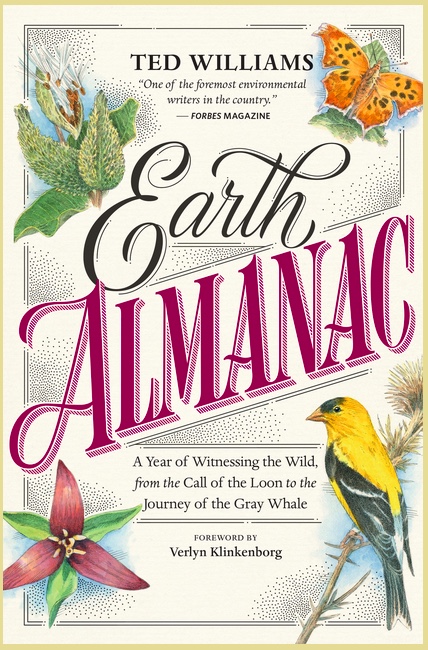
Earth Almanac by Ted Williams
We have all been put into a strange place during these days of pandemic isolation, and I feel like I have been blessed with having time to stop and smell the flowers. In my reading, I have discovered a new book that will help everyone do the same.
Earth Almanac by Ted Williams was due to be published on April 28, but it is now being released on September 29. I think that it is well worth the wait, but I have one solution to consider at the end of this review.
Earth Almanac is being published by a small independent press called Storey Publishing in Massachusetts. They specialize in books on nature, gardening, and how-to subjects, including an excellent line of knitting books, like One Skein Wonders. Postponing publication has been happening with many books during this pandemic, and when I reached out to this publisher about their decision, they said: they decided to delay publishing several books “because, with so many sales channels and libraries closed, they don’t want to release books into a market that limits readers’ options for accessing them.”
The book is collection of mini essays arranged around the seasons, with a longer introductory essay for each season. It’s not really a field guide, as such, but it could be used during walks to inspire you to look for the things that he so minutely observes or to make you recollect scenes from your past.
I highly recommend this book for readers of all ages for three reasons.
1. The first is that these are all very short essays, taking maybe 30 seconds to 2 minutes to read. They are completely self-contained, do not need to be read in any order, and can be picked up at any point without losing any sense of meaning. I can’t think of a better solution in this time of distraction. It was difficult to choose one essay to share, but here is this one, called “Underdogs” (page 92):
While this one focuses on the plains states, the majority deal with nature in our own Northeast region.
2. The second reason to read this is that these are exquisite little pieces that Williams writes in a fun, descriptive way that is often poetic and literary. When talking about the elusive river herring, for instance, he writes “Mostly they pass unseen, save by herons hunched over the pools like old men in ratty down jackets standing at a truckstop counter.” (page 89) He creates essay titles that reference classic poetry, “Ode to a Devil’s Urn” is one example, and he quotes from the children’s classic Charlotte’s Web by E.B. White to describe how many juvenile North American spiders disperse.
3. The third reason is that Williams writes engaging pieces that combine natural observations and scientific research that draw readers in by making them exclaim over the startling facts—did you know that chipmunks can hold up to two heaping tablespoons of corn kernels in their cheeks? He also gives how-to instructions on interacting with nature, such as finding and cooking wild leeks in the spring. And, he talks about ways to involve kids (don’t go on a nature walk, say that you’re going on an expedition) and then suggests ways to get them fully involved. Puff the Magic Fungus (page 194) is one essay that is a good example of this:
(This was used as a talk for the Richmond Memorial Library's "Lunch Time Book Chats" shared on Zoom on May 13. Thanks to the publisher and Netgalley for an advance copy.)
Earth Almanac by Ted Williams was due to be published on April 28, but it is now being released on September 29. I think that it is well worth the wait, but I have one solution to consider at the end of this review.
Earth Almanac is being published by a small independent press called Storey Publishing in Massachusetts. They specialize in books on nature, gardening, and how-to subjects, including an excellent line of knitting books, like One Skein Wonders. Postponing publication has been happening with many books during this pandemic, and when I reached out to this publisher about their decision, they said: they decided to delay publishing several books “because, with so many sales channels and libraries closed, they don’t want to release books into a market that limits readers’ options for accessing them.”
The book is collection of mini essays arranged around the seasons, with a longer introductory essay for each season. It’s not really a field guide, as such, but it could be used during walks to inspire you to look for the things that he so minutely observes or to make you recollect scenes from your past.
I highly recommend this book for readers of all ages for three reasons.
1. The first is that these are all very short essays, taking maybe 30 seconds to 2 minutes to read. They are completely self-contained, do not need to be read in any order, and can be picked up at any point without losing any sense of meaning. I can’t think of a better solution in this time of distraction. It was difficult to choose one essay to share, but here is this one, called “Underdogs” (page 92):
Remove the black-tailed prairie dog from its niche in our western plains and—as Americans have discovered over the past century—the whole biota collapses like the sides of stone arch. This ground squirrel, whose “dog” name derives from its bark, is called a keystone species because it provides food and/or habitat for at least 59 vertebrate species—29 birds, 21 mammals, 5 reptiles, and 4 amphibians.
The elaborate subterranean design of a prairie-dog town includes bedrooms, latrines, birthing and nursing chambers, pantries, even cemeteries. In May look for youngsters as they stumble up into the sunlight for the first time in their six-week lives. Soon they’ll be roughhousing, grooming each other, and greeting neighbors with chirps, hugs, and open-mouthed “kisses.”
Because prairie dogs eat forbs and grasses, they have been widely poisoned and shot in the mistaken belief that they compete with livestock. Studies, however, show that in aerating and turning over the soil they produce high-quality forage.
While this one focuses on the plains states, the majority deal with nature in our own Northeast region.
2. The second reason to read this is that these are exquisite little pieces that Williams writes in a fun, descriptive way that is often poetic and literary. When talking about the elusive river herring, for instance, he writes “Mostly they pass unseen, save by herons hunched over the pools like old men in ratty down jackets standing at a truckstop counter.” (page 89) He creates essay titles that reference classic poetry, “Ode to a Devil’s Urn” is one example, and he quotes from the children’s classic Charlotte’s Web by E.B. White to describe how many juvenile North American spiders disperse.
3. The third reason is that Williams writes engaging pieces that combine natural observations and scientific research that draw readers in by making them exclaim over the startling facts—did you know that chipmunks can hold up to two heaping tablespoons of corn kernels in their cheeks? He also gives how-to instructions on interacting with nature, such as finding and cooking wild leeks in the spring. And, he talks about ways to involve kids (don’t go on a nature walk, say that you’re going on an expedition) and then suggests ways to get them fully involved. Puff the Magic Fungus (page 194) is one essay that is a good example of this:
Puffballs, those fungi that appear throughout most of North America after autumn rains, on rich humus and over buried stumps, seem made for kids. The smoke that spews from the hole atop the dry, leathery husk when you tap it or step on it is spores from the already-dead fruit. So fine are these spores that they can drift to elevations of five miles and travel between continents. The giant puffball, which sometimes reaches four feet in diameter, may produce 7 trillion spores annually.These essays are magical and not to be missed. It turns out that Earth Almanac is an updated version of Williams' earlier book called Wild Moments. This is only available as an e-book and is on Hoopla, which is a library resource for ebooks, audiobooks, movies, and music.
But the magic doesn’t end there. Depending on which of the 270 species you encounter, a puffball may grow from the size of a golf ball to the size of a baseball in a single night. Moreover, the main part of the plant—the mycelium—lives underground and extends in all directions through the soil, sometimes creating a circle of puffballs above. A much older—and, some would argue, better—explanation has it that these circular growth patterns are set by the feet of dancing fairies; hence the popular name “fairy rings.” Since this theory cannot be disproved, why hasten its extinction when you are afield with young companions?
(This was used as a talk for the Richmond Memorial Library's "Lunch Time Book Chats" shared on Zoom on May 13. Thanks to the publisher and Netgalley for an advance copy.)
Wednesday, May 6, 2020
The Tourist Attraction by Sarah Morgenthaler
Debut author Sarah Morgenthaler sets up a funny rom-com in the tiny Alaskan town of Moose Springs, where Graham Barnett, the owner of the Tourist Trap diner shows real disdain for his out-of-town clientele and where unconventional tourist Zoey Caldwell makes him set aside all his preconceived notions and rules about how to treat the "enemy."
Zoey revels in being in Alaska, although it has come from personal budgetary sacrifice to get there. She is enthusiastic about everything and wants to experience as much as possible, even when it means taking the cheaper and less impressive excursions or finding her own way through local forest trails. And because of that, she is thrown together with Graham in some pretty spectacular ways, starting with interrupting his wood sculpting in full mask and chain saw. What’s a girl to do? Zoey’s instincts go into full survival mode, leaving Graham wondering whether he will ever be able to father children.
Included in the funny setups are the characters that the author introduces. She has a great way of juxtaposing types of people with things that just don’t seem to match, like Graham’s having coordinating outfits and hats for his sheepdog Jake.
One of the great things about the book is that anyone who has traveled or worked within the tourist industry knows that the portrayal of the guests at the high-end resort are pretty close to the truth, and the truth hurts. People ARE often thoughtless and spoiled when traveling to other places, and they don’t come off in ways that play well for the locals. It’s used very effectively here, and it provides a lot of humor as well as some suspense.
Although readers will know where the ending is going (yes, it has to be a happily every after), the way that it is done is creative and fun and not as predictable as expected. Interplay is flirty and sassy with lots of innuendoes, but the deed is behind closed doors.
Some of this does stretch credulity (a truck stop waitress is best friends with a wealthy entrepreneur? Ulysses the moose is in love with the fresh baked cinnamon rolls?), although the story of moneyed and inconsiderate tourists, the natural beauty and dangers of Alaska, the budget tours gone wrong, the hilarious conversations between Graham and his friends and Graham and Zoey all add up to diverting light reading.
(Sourcebooks, 2020) Thanks to Edelweiss and the publisher for an advance copy.
Zoey revels in being in Alaska, although it has come from personal budgetary sacrifice to get there. She is enthusiastic about everything and wants to experience as much as possible, even when it means taking the cheaper and less impressive excursions or finding her own way through local forest trails. And because of that, she is thrown together with Graham in some pretty spectacular ways, starting with interrupting his wood sculpting in full mask and chain saw. What’s a girl to do? Zoey’s instincts go into full survival mode, leaving Graham wondering whether he will ever be able to father children.
Included in the funny setups are the characters that the author introduces. She has a great way of juxtaposing types of people with things that just don’t seem to match, like Graham’s having coordinating outfits and hats for his sheepdog Jake.
One of the great things about the book is that anyone who has traveled or worked within the tourist industry knows that the portrayal of the guests at the high-end resort are pretty close to the truth, and the truth hurts. People ARE often thoughtless and spoiled when traveling to other places, and they don’t come off in ways that play well for the locals. It’s used very effectively here, and it provides a lot of humor as well as some suspense.
Although readers will know where the ending is going (yes, it has to be a happily every after), the way that it is done is creative and fun and not as predictable as expected. Interplay is flirty and sassy with lots of innuendoes, but the deed is behind closed doors.
Some of this does stretch credulity (a truck stop waitress is best friends with a wealthy entrepreneur? Ulysses the moose is in love with the fresh baked cinnamon rolls?), although the story of moneyed and inconsiderate tourists, the natural beauty and dangers of Alaska, the budget tours gone wrong, the hilarious conversations between Graham and his friends and Graham and Zoey all add up to diverting light reading.
(Sourcebooks, 2020) Thanks to Edelweiss and the publisher for an advance copy.
Saturday, May 2, 2020
Beach Read by Emily Henry
(The pandemic has turned the publishing world upside down, but Beach Read by Emily Henry appears to be coming out as planned on May 19 from Penguin Random House). January Andrews writes women's fiction; Augustus Everett writes literary fiction. The two had a love/hate relationship in college when January knew him as Gus and when his seemingly arrogant attitude and critical commentary of her work cooled other feelings for this guy she and her friend nicknamed Sexy, Evil Gus (or SEG for short). He sees her as the fairy princess of all sweetness and light, she views him as the angsty, brooding writer who sees only the dark side.
Now, several years later, they are published authors, hitting the bestsellers list at the same time, although Gus is, disturbingly, three slots ahead of January. They are also both having major writers' blocks, and when January runs short of funds as well as ideas, she heads out to the vacation town in Michigan to the house her late father left her...right next door to Sexy, Evil Gus.
Well, what could go wrong--or right? Their "reunion" meeting at the local bookstore is anything but cordial, and their attendance at the evening's book discussion takes their relationship to new lows. But, it does prompt them to place a bet that may restart their writing. January challenges Gus to write a rom-com and he dares her to write literary fiction. Going along with the bet are educational evenings for research and ideas on character and plot development, how romance is started and how to understand the bad things that happen to people.
Their conversations are snarky and flirty, and the first half of the book does read like a rom-com, but it changes about halfway through as serious and darker themes are explored as they relate to the lives of each of them, both personally and professionally.
This is an entertaining, page-turning and unusual story that has fun references to popular authors and some great secondary characters including a true eccentric who runs the local bookstore. There literally IS a beach read here, but not in the way that they are generally understood.
Thanks to Edelweiss and the publisher for an advance copy.
Subscribe to:
Posts (Atom)
Veil of Doubt by Sharon Virts
A story of a serial killing? Not my thing! But I chose to give a new piece of historical fiction a try, and I discovered a fascinating co...
-
A story of a serial killing? Not my thing! But I chose to give a new piece of historical fiction a try, and I discovered a fascinating co...
-
It's an achievement to come up with something new and fresh in a historical fiction genre that is bursting at the seams (specifically,...
-
In 2005, local readers (in western New York) were introduced to Julia Spencer-Fleming, whose first novel In the Bleak Midwinter was the t...